In modern college football, very few names generate the kind of anticipation, debate, and long-term projection as Harold Perkins Jr. of the LSU Tigers. From the moment he stepped onto the field in Baton Rouge, Perkins has been viewed not just as a promising linebacker, but as a future NFL defensive cornerstone—an athlete whose ceiling extends far beyond the collegiate level.
Yet, as the 2026 NFL Draft conversation intensifies, a critical question now dominates scouting rooms, fan discussions, and LSU’s internal strategy meetings:
Should Harold Perkins Jr. remain at LSU to further develop, or is he ready to declare early for the NFL Draft 2026?
This is not just a career decision. It is a defining moment that could shape the trajectory of both the player and the LSU defensive identity.
1. HAROLD PERKINS JR.: MORE THAN JUST A COLLEGE STAR
To understand the magnitude of this debate, one must first understand what makes Perkins exceptional.
Unlike traditional linebackers who rely solely on physical dominance or instinct, Perkins represents a hybrid evolution of the modern defensive player. His game blends:
- Elite sideline-to-sideline speed
- Explosive pass-rushing ability
- Advanced pre-snap recognition
- Versatility across multiple defensive alignments
- Rare closing acceleration in open space
At LSU, his presence fundamentally alters offensive game plans. Opposing coordinators often must dedicate extra protection schemes just to account for his potential blitz angles and movement pre-snap.
In scouting terms, Perkins is not simply a linebacker. He is a “defensive disruptor”—a player who does not just execute plays, but reshapes how plays are designed against him.
That level of impact is what has placed him firmly on NFL draft boards years ahead of schedule.
2. THE 2026 NFL DRAFT LANDSCAPE: HIGH REWARD, HIGH PRESSURE
The NFL Draft is not only about talent—it is about timing, projection, and risk assessment. For defensive prospects like Perkins, the evaluation process becomes even more complex.
NFL teams typically evaluate prospects based on three core pillars:
- Physical readiness (size, speed, durability at pro level)
- Football IQ (recognition, adaptability, scheme understanding)
- Consistency under elite competition
Perkins already grades highly in the first two categories. His athletic profile translates well to the modern NFL defense, especially in schemes that prioritize hybrid linebackers capable of both coverage and pressure.
However, consistency remains the key variable. The jump from NCAA to NFL is not incremental—it is exponential. Every weakness is amplified, every hesitation punished, and every gap in technique exploited by professional offenses.
This is why draft eligibility decisions are rarely straightforward for elite college defenders.
3. THE CASE FOR STAYING AT LSU: DEVELOPMENT OR DELAY?
From a developmental standpoint, another season at LSU Tigers could offer significant benefits.
Staying would allow Perkins to:
- Expand his coverage responsibilities in complex defensive packages
- Refine his block-shedding technique against elite offensive linemen
- Increase leadership experience within the locker room
- Build a more complete statistical and film profile for NFL evaluators
LSU’s defensive system is also known for producing NFL-ready talent. The program exposes players to multiple fronts, disguised blitz packages, and high-pressure SEC competition—arguably one of the most difficult environments in college football.
However, staying also carries risks:
- Increased exposure to injury in high-intensity matchups
- Opposing offenses adapting specifically to his tendencies
- Potential plateau in draft stock if performance stagnates
- Emotional and physical fatigue from extended college workload
In modern scouting economics, timing often determines draft value as much as talent does. A prospect’s “peak valuation window” can close quickly if progression slows.
4. DECLARING EARLY: THE NFL DREAM VS. REALITY GAP
On the other side of the decision lies the NFL Draft 2026—a stage where opportunity and risk coexist at the highest level.
If Perkins declares early, he enters a league that demands immediate adaptation. The NFL is not simply faster; it is structurally more complex:
- Offensive schemes are more layered and adaptive
- Quarterbacks process defensive looks at elite speed
- Blocking schemes isolate linebackers in space constantly
- Mistakes are punished with precision, not probability
Yet, the upside is undeniable.
Early declaration could provide:
- First-round draft potential earnings and contract security
- Immediate exposure to elite coaching and training infrastructure
- Opportunity to grow within a professional system tailored for specialization
- Faster career trajectory toward elite defensive recognition
Many NFL stars have built Hall of Fame careers after early declarations. But just as many have struggled when entering before fully refining their skill sets.
This is the core dilemma: enter early and adapt under pressure, or stay longer and refine under protection.
5. STRATEGIC PERSPECTIVE: WHAT NFL TEAMS REALLY SEE
From a scouting perspective, Perkins represents one of the most intriguing defensive evaluations in the 2026 class.
NFL evaluators likely see him as:
- A potential hybrid linebacker/safety in sub-packages
- A situational pass rusher in early career development phases
- A long-term defensive starter with scheme flexibility
However, projection-based players require careful drafting. Teams must decide whether they are selecting:
- A polished product ready to contribute immediately
- Or a high-upside athlete requiring structured development
This distinction often determines whether a player becomes a franchise cornerstone or a rotational piece.
For Perkins, the margin between those outcomes depends heavily on timing.
6. THE FINAL QUESTION: READINESS OR POTENTIAL TIMING?
Ultimately, the Harold Perkins Jr. decision is not just about football ability—it is about strategic career management.
If he stays at LSU:
- He risks delaying professional entry but strengthens long-term readiness.
If he enters the NFL Draft 2026:
- He accelerates his career but accepts higher volatility in early development.
Both paths carry legitimacy. Both paths carry consequences.
And that is what makes this moment so compelling.
CONCLUSION: A CAREER-DEFINING MOMENT IN REAL TIME
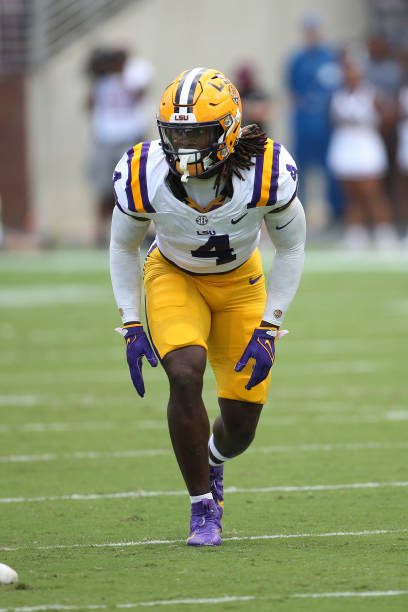
What is unfolding around Harold Perkins Jr. is more than draft speculation—it is a real-time case study in modern athlete development strategy.
For LSU Tigers, his decision could reshape defensive identity and roster planning.
For the NFL, it could introduce one of the most dynamic defensive prospects of the 2026 class.
And for Perkins himself, it is the ultimate question every elite athlete eventually faces:
Is it better to become ready… or to become great at the right time?
The answer will define not only his future—but possibly the trajectory of an entire defensive era.