“We Will NEVER Be Bought by Billionaires Like You. The Eagles Are Not for Sale — We Stand With the People of Philadelphia Against Greed, Racism, and Corporate Exploitation.”
The announcement landed like a lightning strike across the sports world.
Activewear
At 9:17 a.m. Friday, the Philadelphia Eagles released a single-page statement that upended every assumption about modern professional sports:
“We thank Tesla Inc. for its offer. But the Philadelphia Eagles are not for sale — in name, image, or principle. We represent the people of Philadelphia, not corporate billionaires. We will never trade integrity for a check, no matter how many zeros it carries.”
Within minutes, #FlyEaglesFly and #NotForSale trended worldwide. ESPN interrupted its morning broadcast. CNBC ran the headline “Elon Musk Rebuffed by the Birds.”
The NFL — a league built on mega-deals, naming rights, and billion-dollar branding — had never seen anything like it.
The Offer That Shook the League
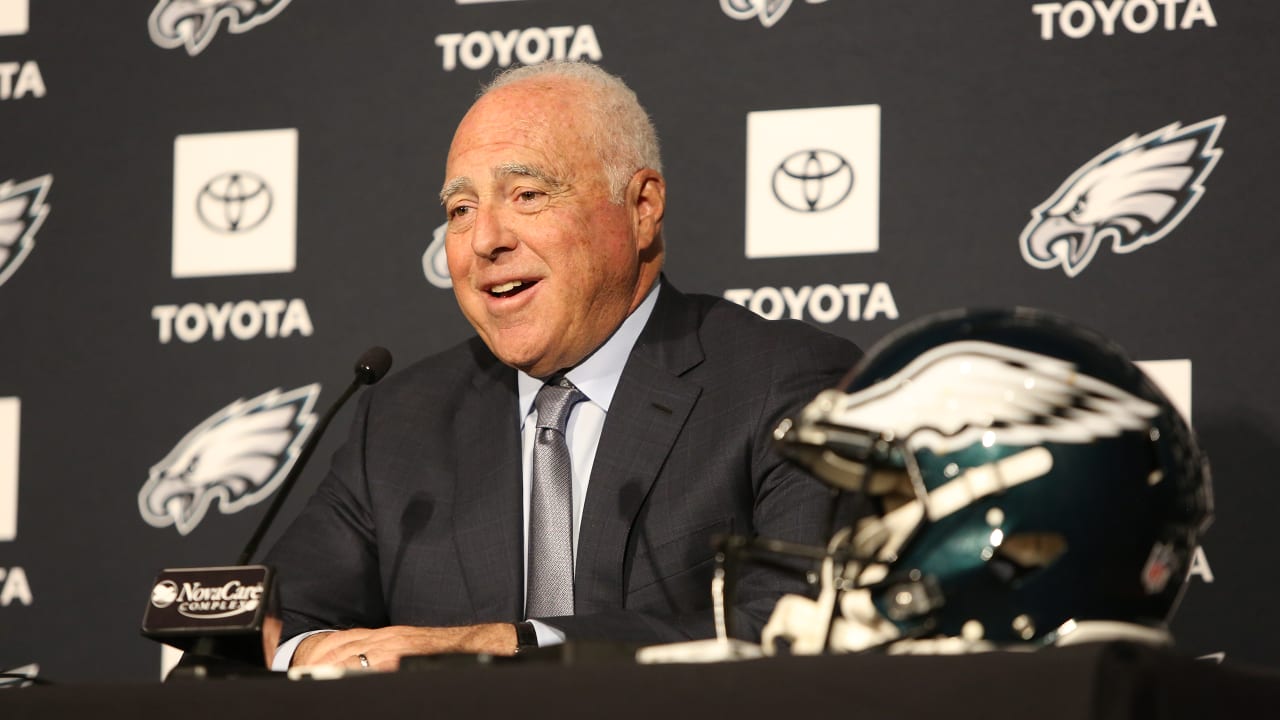
According to league insiders, Tesla had proposed a ten-year, $500 million sponsorship agreement, reportedly the largest in North American sports history.
The deal would have renamed Lincoln Financial Field to “Tesla Stadium” and placed the electric-car giant’s logo on team uniforms, practice facilities, and digital media.
Elon Musk himself had teased the partnership days earlier with a cryptic post on X:
“Big energy coming to Philly. ⚡🐦”
For most franchises, such an offer would be irresistible. But the Eagles’ front office, led by General Manager Howie Roseman and Chairman Jeffrey Lurie, stunned executives by declining immediately.
“They didn’t even negotiate,” said one NFL executive anonymously. “They just said no. Not even a counteroffer. Total shutdown.”
“Philadelphia Doesn’t Bow”
Hours later, Head Coach Nick Sirianni and quarterback Jalen Hurts addressed reporters from the team’s practice facility in South Philadelphia.
Hurts, wearing a simple black hoodie with “Philly Pride” printed across the chest, delivered the quote that would soon echo on murals and memes across the city:
“This team’s built on sweat, not stock prices. Philadelphia doesn’t bow to billionaires.”
Sirianni nodded beside him.
“We play for the people who pour their hearts into these stands — bus drivers, teachers, hospital workers. That’s our sponsorship.”
Within an hour, fans had already begun painting “NOT FOR SALE” banners outside Lincoln Financial Field.
A City That Recognized Itself
To outsiders, the reaction seemed emotional — even reckless. But to Philadelphia, it was personal.
This is the city that booed Santa Claus, cheered grit over glamour, and treats blue-collar authenticity as religion.
“You can’t buy Philly,” said lifelong fan Anthony DeLuca, standing outside Dalessandro’s Steaks in Roxborough. “We’ve been through recessions, layoffs, championships, and heartbreak. Money comes and goes. Pride stays.”
On Broad Street, a chalk message appeared on the sidewalk:
“500 Million Can’t Buy Brotherhood.”
Tesla Responds — And So Does Elon
By noon, Tesla issued its own statement:
“We respect the Eagles’ decision. Our offer was intended to support renewable-energy initiatives in stadiums and communities. We remain open to future collaborations.”
But Elon Musk took a different tone on social media.
“Strange that the ‘City of Brotherly Love’ doesn’t love innovation,” he posted on X. “Guess they prefer gasoline and losing records.”
The tweet backfired spectacularly.
Fans flooded his replies with green heart emojis and sarcastic memes:
“We run on batteries of passion, not your stock options.”
“Bro, the Eagles have more power than your cars.”
By evening, Musk had deleted the post — but the screenshots lived on.

Inside the Meeting That Changed Everything
Sources inside the organization revealed that the decision came down to a single meeting on Tuesday night.
Tesla executives had flown in to pitch the deal — complete with sleek presentations promising solar-powered upgrades, futuristic fan experiences, and half-a-billion in guaranteed revenue.
When the presentation ended, owner Jeffrey Lurie reportedly sat silently for several seconds before responding.
“You’re offering money,” he said. “But what our fans give us is something money can’t buy.”
He stood up, looked at the assembled team executives, and said simply, “We’re not doing this.”
One staff member recalled that moment vividly:
“He didn’t slam his hand or raise his voice. He just said it like it was final. And everyone in the room nodded. It felt… pure.”
A Statement Rooted in Principle
The Eagles’ official press release framed the refusal not as anti-corporate rhetoric but as a stand for community values:
“Our city faces rising costs, widening inequality, and deep cultural divisions. To take this money while families struggle would betray what Philadelphia stands for. The Eagles exist because of our people — not despite them.”
The team pledged instead to redirect future marketing partnerships toward local small businesses and minority-owned enterprises, including the expansion of its “Philly First” initiative that funds neighborhood youth programs and public-school athletic facilities.
Activewear
Fans React: “This Is Why We Love Them”
By Friday night, fans had gathered outside Lincoln Financial Field waving homemade signs: “Not for Sale — Fly Eagles Fly” and “Faith > Fortune.”
On Broad Street, a group of musicians played acoustic renditions of the team anthem. One held a cardboard cut-out of Elon Musk with a speech bubble that read, “Even I can’t afford Philly’s soul.”
“This is bigger than football,” said fan Shonda Williams, a SEPTA bus driver. “They told every billionaire trying to own this country — not us. Not here.”
The League Watches — Nervously
Behind the scenes, the NFL is said to be uneasy.
League Commissioner Roger Goodell reportedly contacted the Eagles organization privately to express “concern over the precedent” the decision might set.
“If one team starts rejecting corporate partnerships on moral grounds, it could open the floodgates,” said one league insider.
But analysts argue that the move could actually strengthen the Eagles’ brand — turning moral conviction into a new form of market power.
“Authenticity is currency,” said sports-marketing expert Dr. Elena Ruiz. “In an era when fans distrust corporations, standing up to one could make the Eagles the most beloved team in America.”
A Tale of Two Visions
The standoff between Tesla and the Eagles has come to symbolize two visions of the future.
For Musk, progress is technological — faster, smarter, global.
For the Eagles, progress is communal — rooted, local, accountable.
“You can build a rocket,” one columnist wrote in The Philadelphia Inquirer, “but you can’t build trust in a factory. That’s earned, not engineered.”
Players Take the Mic
Star wide receiver A.J. Brown posted on Instagram:
“500 million can’t buy loyalty. Philly’s built different.”
Linebacker Haason Reddick, a Camden native, tweeted simply:
“My city. My people. My team.”
Even retired legend Brian Dawkins joined in:
“Proud of these Birds. This ain’t about money — it’s about message.”
Across the Country, Teams Take Note
By Sunday, reporters were asking executives across the league if their teams would ever make a similar stand.
The responses were cautious.
“Every organization has to make its own decisions,” said Cowboys owner Jerry Jones, smirking. “But let’s just say I don’t leave half a billion on the table.”
The contrast only fueled Philadelphia’s pride.
“That’s why we’re Philly,” fan Liam O’Connor said. “Dallas would sell its star for a nickel. We’d rather wear duct tape than a billionaire’s logo.”
The People’s Team
In a city still scarred by factory closures and rising inequality, the Eagles’ defiance struck a deeper chord.
Local activist María Delgado, who runs a youth mentorship program in Kensington, said the statement resonated with her community:
“When the most powerful people in sports say, ‘We stand with you,’ that means something. It tells kids their city matters more than money.”
Activewear
Across Philadelphia, small businesses reported surges in sales of homemade “Not for Sale” merchandise — none officially licensed, all grassroots.
“Every shirt sold,” Delgado laughed, “feels like a touchdown for the people.”
Elon’s Countermove
In typical Musk fashion, the billionaire refused to let the narrative rest.
Two days later, he announced that Tesla would instead partner with a “different franchise more aligned with innovation.”
The internet erupted with jokes:
“Good luck convincing Dallas to go solar,” one tweet read.
“Maybe the Patriots — they love things that run on batteries.”
A New Kind of Victory
By week’s end, the Eagles had turned down half a billion dollars — and gained something arguably more valuable: respect.
Sponsors that had once overlooked community programs suddenly wanted in. City leaders praised the team for “standing shoulder-to-shoulder with working Philadelphians.”
And in locker rooms around the league, players whispered about what it meant — that maybe, just maybe, a team could win without selling its soul.
“The Eagles Are Not for Sale” — A New Creed
On Monday morning, a new banner appeared above the entrance of Lincoln Financial Field.
White letters, green background.
THE EAGLES ARE NOT FOR SALE
Below it, smaller text read:
“We play for the city that built us.”
At practice that afternoon, Jalen Hurts looked up at the sign, smiled, and nodded.
“That’s our sponsorship,” he said. “Right there.”
The Legacy of a Decision
Sports historians are already comparing the moment to Muhammad Ali refusing the draft or Billie Jean King demanding equality — not for its defiance, but for its principle.
In a world where athletes are branded like products and franchises operate as corporations, the Eagles’ declaration felt radical:
Human first. Profit second.
“They reminded us that integrity can still be part of the game,” wrote columnist Tara Jenkins. “They reminded us that winning isn’t only on the scoreboard.”
The Final Word
When asked if he regretted rejecting Tesla’s $500 million offer, Jeffrey Lurie gave a soft smile.
“We’ve got something no one can buy,” he said. “The trust of a city. That’s worth more than anything Elon could offer.”
He paused, then added, almost to himself:
“Philadelphia doesn’t sell its soul. It sings it.”
And as Sunday rolled around, 70,000 fans filled the stadium — chanting, roaring, believing.
Not for a brand. Not for a billionaire.
But for themselves.
For the team that told the world some things aren’t for sale.