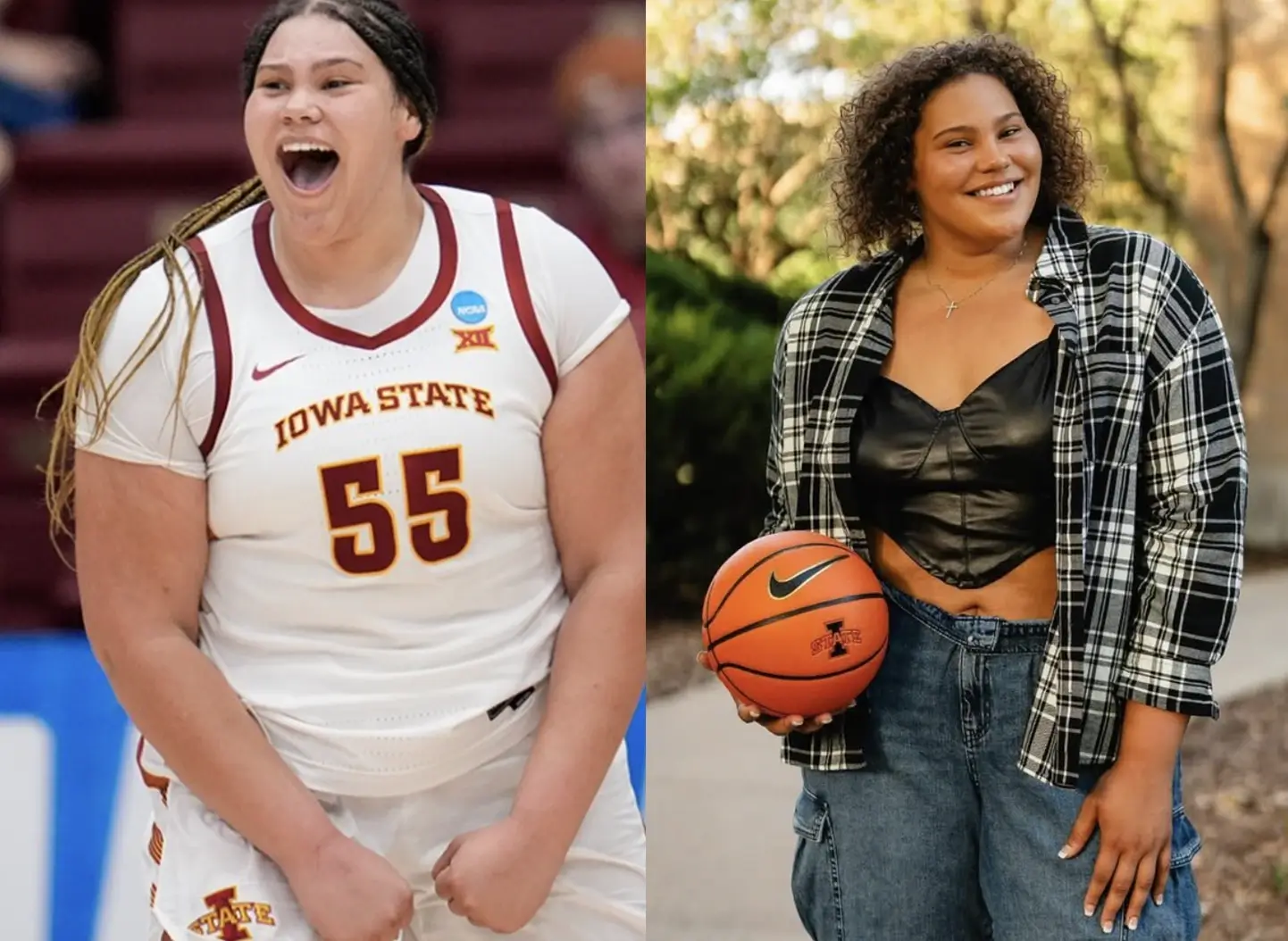
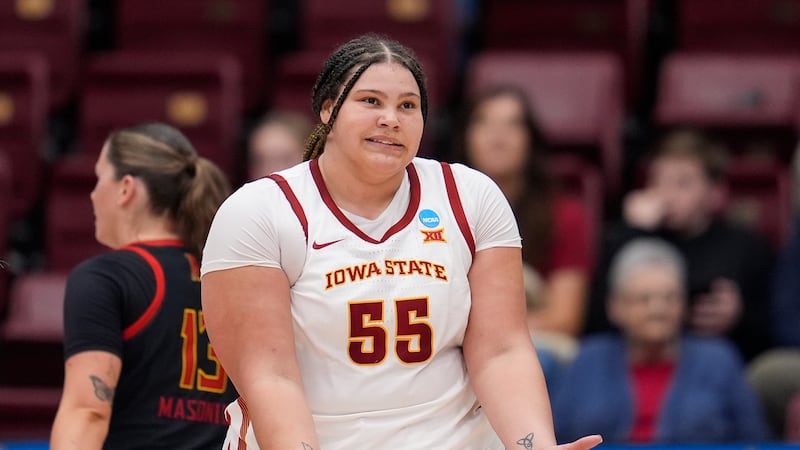
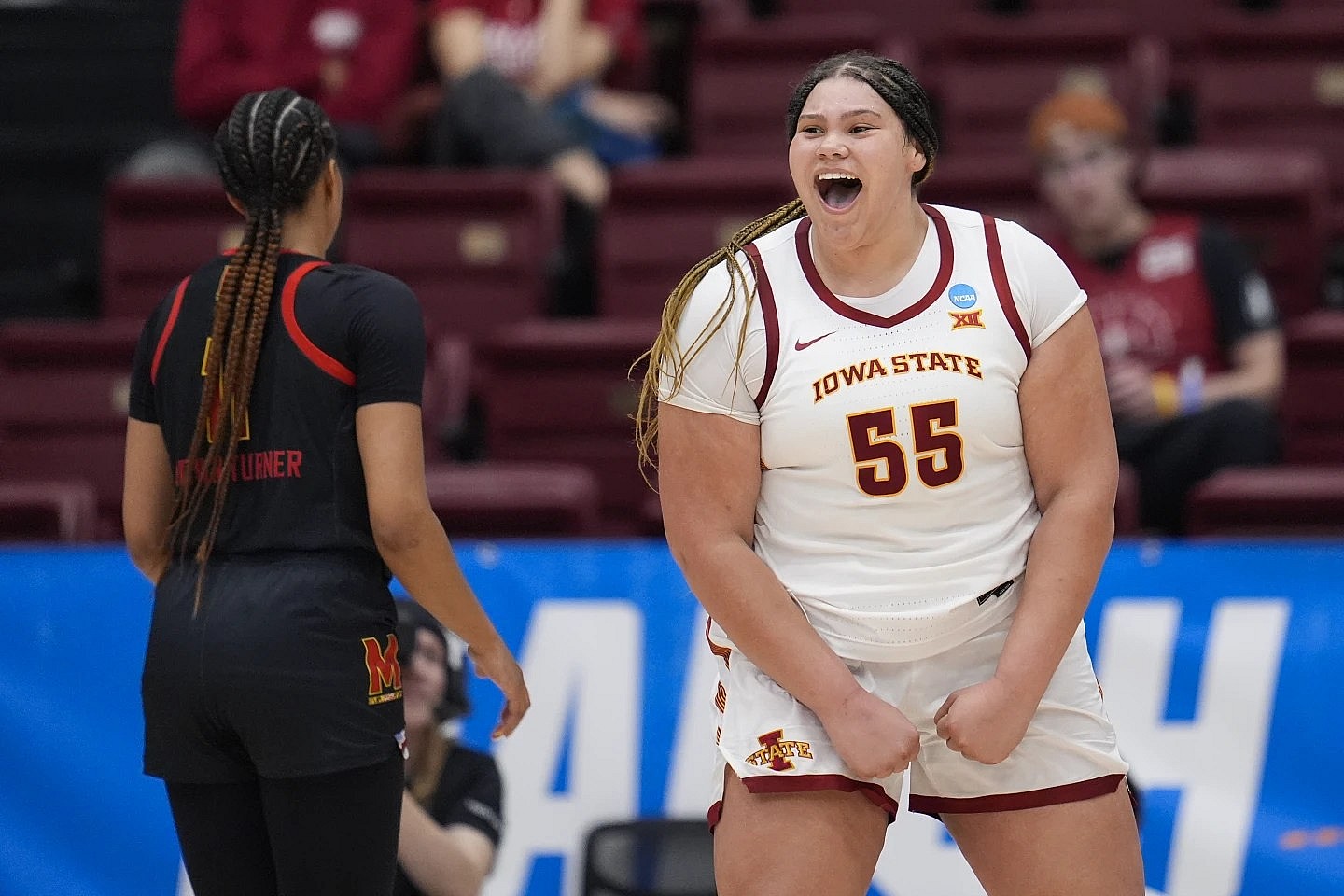
Fifteen minutes after the story broke, college basketball found itself at the center of a cultural firestorm, as Iowa State standout Audi Crooks publicly refused to wear an LGBT armband during crucial games, framing her stance as a defense of competitive focus rather than an endorsement of political or ideological messaging.
Crooks’ statement, emphasizing that college basketball should prioritize the game, competition, and winning, spread rapidly across social platforms, instantly dividing fans, athletes, commentators, and administrators into sharply opposed camps, each interpreting her words through their own beliefs about sports, identity, and social responsibility.
Supporters praised Crooks for what they described as personal conviction and courage under pressure, arguing that athletes should not be compelled to display symbols they do not personally support, especially during high-stakes competition where mental clarity and performance are paramount.
Critics responded just as forcefully, accusing Crooks of dismissing inclusion efforts and misunderstanding the purpose of symbolic gestures, insisting that visibility initiatives are designed to protect marginalized students and create safer environments, not distract from the integrity or competitiveness of the sport itself.
Within hours, hashtags supporting and condemning Crooks trended simultaneously, illustrating how quickly a single decision can escape the confines of a gymnasium and become a proxy battle for broader societal disagreements about free expression, institutional values, and the evolving role of athletes as public figures.
Iowa State officials reportedly faced immediate pressure to clarify their policies, as fans demanded to know whether armband participation was mandatory, optional, or encouraged, and whether athletes’ personal beliefs would be respected equally alongside the university’s stated commitments to diversity and inclusion.
Former players and coaches weighed in, noting that previous generations rarely confronted such issues so publicly, while acknowledging that modern athletes operate in an era where silence itself is often interpreted as a statement, making neutrality increasingly difficult to maintain without controversy.
Legal and academic experts also entered the discussion, highlighting the complex balance between institutional expression and individual rights, particularly within public universities, where policies must navigate constitutional considerations while fostering environments that reflect shared community values.
Some observers argued that framing the issue as “political propaganda” oversimplifies the debate, suggesting that symbols can carry multiple meanings depending on perspective, and that refusing participation may unintentionally signal exclusion even if that was not the athlete’s stated intent.
Others countered that compelling symbolic participation risks alienating athletes who believe sports should remain separate from cultural campaigns, warning that enforced gestures could undermine authenticity and fuel resentment rather than genuine understanding or unity within teams.
As media coverage intensified, Crooks herself became the focal point rather than the underlying policy question, raising concerns about the personal toll such viral attention can exact on young athletes navigating performance expectations alongside relentless public scrutiny.
The NCAA, long cautious in addressing cultural flashpoints, now faces renewed calls for clearer guidance, as conferences and schools struggle to respond consistently while avoiding accusations of either suppressing free expression or neglecting inclusion responsibilities.
For many fans, the controversy exposed a deeper anxiety about whether sports can still function as common ground, or whether every arena has become another stage for ideological conflict, where even pregame attire carries symbolic weight beyond the scoreboard.
What remains undeniable is that Audi Crooks’ refusal has already reshaped conversation far beyond Iowa State, forcing college basketball to confront uncomfortable questions about choice, visibility, and whether unity is better achieved through shared symbols or mutual respect for disagreement.
As debates continue to rage online and in living rooms nationwide, this moment may be remembered not for a single armband, but for revealing how profoundly the meaning of sports is being renegotiated in an era where competition, identity, and expression increasingly collide.